Tag Archive: Elem Klimov


Son Of Saul: humanity vs barbarism

SON OF SAUL directed by Lázió Nemes (Hungary. 2015)
220px-son_of_saul_28poster29

How much of the horror of the holocaust can you stand to watch?

Newsreel footage can turn us all into passive voyeurs to humankind’s capacity for evil. On the other hand, however noble the intentions, turning history into cinema can reduce Nazi atrocities into entertainment.

Lázió Nemes’ remarkable debut avoids both pitfalls. You are never in any doubt about the barbarism at the heart of the story but the camera never dwells on the details. Continue reading

FAVOURITE MOVIES SEEN DURING 2012

Scenes from the movie that make the biggest impression on me in 2012

I watched a lot of movies this year but not that many in the cinema and not that many new releases.

Only one of my top ten movies actually came out this year and none were made by Americans.

Mostly, I’ve been going backwards with the Sight & Sound list of the best 50 films ever made being a constant point of reference.

A common thread running through most of these movies is that glib and preconceived notions of good and evil need to be constantly challenged.

I wrote short pieces about all of these films on this blog – hit the search button to find out more about why they made such an impression on me.

1. JEANNE DIELMAN, 23 QUAI DU COMMERCE, 1080 BRUXELLES directed by Chantal Akerman (1975)
2. A SEPARATION directed by Asghar Farhadl (2011)
3. WE NEED TO TALK ABOUT KEVIN directed by Lynne Ramsey (2011)
4. COME AND SEE directed by Elem Klimov (1985)
5. SHAME directed by Steve McQueen (2011)
6. AMELIE directed by Jean-Pierre Jeunet (2001)
7. L’UOMO CHE VERRA’ directed by Giorgio Diritti (2009)
8. RASHOMAN directed by Akira Kurosawa (1950)
9. CESERE DEVE MORIRE directed by Taviani Brothers (2012)
10. UGETSU MONOGATARI directed by Kenji Mizoguchi (1953)

WAITING FOR THE MAN

L’UOMO CHE VERRA’ directed by Giorgio Diritti (Italy, 2009)

http://www.slowcult.com/wp-content/gallery//2010/02/luomo-1.jpgIt would have been easy to dramatise the tragic real life events at Marzobotta near Bologna in a sensationalist and exploitative manner, transforming human tragedy into crass entertainment. Instead, the story of the victims is handled with great sensitivity and humanity without glossing over the full-scale of the atrocity.
In 1944, Nazi soldiers massacred 770 people in this small farming community, an act of barbarism that beggars belief. It illustrates that Hitler’s executioners did not confine themselves to the slaughter of Jews but were prepared to slaughter any who dared stand in opposition to Fascism.

Diritti doesn’t claim that his cinematic rendering is historically accurate and it even includes the usual disclaimer at the end that any similarity with  persons living or dead is entirely coincidental. Continue reading

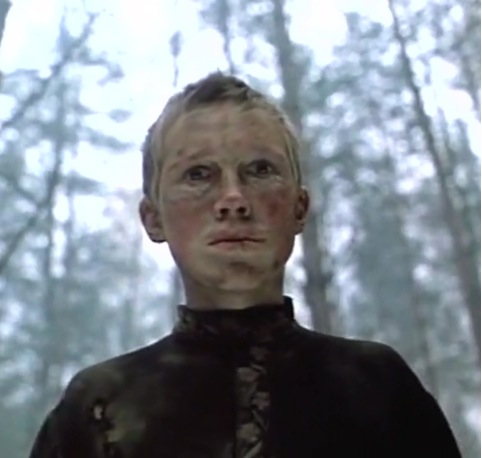
COME AND SEE directed by Elem Klimov  (Soviet Union, 1985)

The original title of this movie was Kill Hitler  which doesn’t win points for subtlety but makes the director’s point of view crystal clear.

By the end our young hero shoots at a framed picture of the Führer and each shot coincides with a newsreel sequence played backwards. History is wound back to before the Hitler’s birth; the dream being that Nazism would not have existed without his leadership.

Hitler is the personification of evil yet the fact that there were so many willing accomplices to the fascist atrocities reveals the sad truth that human wickedness never begins or ends with just one man.

Scenes in the movie of German soldiers laughing and joking as they carry out unspeakable acts highlights the depths of depravity human beings are capable of.  You only have to see the recent footage of American soldiers pissing on the bodies of Iraqi corpses to realise that war legitimizes this descent into barbarism. Continue reading