THE WICKER TREE written and directed by Robin Hardy (UK, 2011)
The Wicker Man is justifiably regarded as one of the best UK films ever made and was number one in my list of of best British cult movies.
The memorable ending can’t have had many viewers wondering what happened next. The finale was certainly conclusive enough for Police Sergeant Neil Howie (Edward Woodward) and probably the only unanswered question was whether the human sacrifice achieved the objective of reviving the harvests for the Pagan community.
Director Robin Hardy must however have felt there was some unfinished business. He wrote a novel on similar themes in 2006 called Cowboys For Christ and The Wicker Tree is the misguided movie version of this story.
It is actually billed as a ‘spiritual sequel’ and Hardy is keen for it to be regarded as a black comedy and not a horror movie. A turkey is the most accurate label I can think of.
In The Wicker Man, the fruit and vegetable crops had floundered, in The Wicker Tree the community can’t produce any children after a leak at a nuclear power station. Resolving this problem once again necessitates the corruption and culling of devout Christians.

There are two doomed believers this time; a God-fearing couple from Dallas who are flown in ostensibly to spread the word of Jesus to heathen inhabitants of Tressock. Hardy regards fundamentalists from Texas as the most striking contrast to this fictional Scottish community.
The unsuspecting lambs to the slaughter have made a vow of chastity to one another. Beth Boothby (Brittania Nichol) is a singer who has turned her back on raunchy trailer trash pop in favour of gospel country music. Her naivety and virginal state make her an ideal May Queen as part of the fertility rituals – she is admired for the fact that she has “smell of the dairy about her….. with a hint of cowshit behind the ears”.
Steve Thompson (Henry Garrett) is her dumb cowboy fiancé, whose pledge of celibacy is quickly put the test and fails at the first hurdle. He is chosen as perfect fodder for the role as the Laddie to Beth’s queen and becomes dispensable once the fruit of his loins has been squeezed.
Graham McTavish as Sir Lachian Morrison is the nearest thing to Christopher Lee’s Lord Summerisle. Lee himself was slated for this role until a back injury ruled him out ( a lucky escape on his part!). Lee’s prominent billing on the credits is a bit of a con as it amounts to the briefest of cameos as an “old gentleman” and mentor to Morrison.
Orlando the policeman is the nearest equivalent to Sergeant Howie but his character is so sketched in I actually missed the fact that he was an outsider sent to investigate rumours of the sun god cult. He spends most of his undercover work under the covers with Lolly (Honeysuckle Weeks), one of the island’s numerous racy females.
The Hollywood remake of The Wicker Man starring Nicolas Cage was dire but worth seeing for the many unintentionally funny scenes – The Wicker Tree is dire and best avoided.
Rather than paying homage to a movie classic, Hardy succeeds only in pissing over its memory.
 It’s a sign of the times that two films in contention for this year’s Oscars are essentially reminders of the magic of cinema and its power to help us visualise our dreams.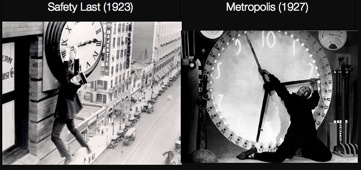
 Central to the story is also the appreciation of Méliès visionary films in the early 1900s, particularly Le Voyage Dans La Lune (1902). Scorsese’s reverence for the Frenchman’s innovative work is obvious and the biographical details of him are quite accurate.
 Isabelle’s love of reading mirrors Hugo’s fascination for cinema. She likes to show off her wide vocabulary and so delights in using words she has learnt like “steadfast”, “covert” and “panache”. She has been brought up to find dreams in books while Hugo’s father introduced him to the wonder of movies at an early age.
 Irvine Welch’s superb novel was in sure hands for the transition to the big screen There’s a first rate cast which Boyle directs with real energy and dark humour to show the ups and downs of heroin addiction. Great music too, including Iggy’s Lust For Life and Underworld’s Born Slippy. The screenplay by John Hodge begins with one of the great ‘fuck the system’ monologues:
 Made before the first wave of British punk had played itself out this movie is, like the music that inspired it, crude and anarchic. Don’t even begin to look for any plot as this is impressionistic, instinctive cinema that sets its own rules. Adam Ant appears before he became a dandy highwayman and Jordan as punk ‘anti-historian’ Amyl Nitrite.