Tag Archive: Stanley Kubrick


Dig, baby, dig!

DIGGER directed by Alejandro González (USA, 2026)

The consensus would have you believe that Digger is a failure due to its poor showing at the box office. If you measure success solely by how much money a movie makes then this viewpoint is accurate.

But only small-minded capitalists casually equate profit with success or quality. Tom Cruise if no socialist but I’m pretty sure that he embarked on this project without any expectation that it would generate the same level of income as his Mission Impossible franchise.

Perhaps one reason why cinemas have not been packed out is that this not an easy film to sell. Although there is a high level of madcap farce, it’s not really a comedy. The themes are too dark, and too close to the current state of the political world, to see it as light entertainment.

The excesses bordering on the grotesque are justified given the state of the planet, and of America in particular. The mess we’re in make it entirely legitimate, even necessary, to forgo the niceties and go all out to expose the stupidity and short-sightedness of our chosen leaders.

Trump’s blinkered ‘Drill Baby Drill’ slogan openly diregards questions of the earth’s sustainabilty in favour of plundering gas and oil supplies. In the key scene of Digger the wealthy tycoon Digger Rockwell taunts an angry mob of opponents by brazenly defending his ‘digging’ in Greenland and pointing out how this has financed the lifestyle they enjoy. In other words, his recklessness funds their decadence. It’s a classic example of the End Times Fascism that we have seen growing over the past two decades.

As a satire, Digger is on a par with Dr Strangelove and it’s no coincidence that a restored version of Kubrick’s 1964 masterpiece is running in cinemas at the same time. Both films use humour and exaggeration to make a serious point. Neither provide answers and suggest that an apocalypic ending is the only logical finale.

Kubrick followed his own instincts when deciding his projects without worrying about appeasing mainstream tastes. He was not afraid to be provocative or contrary. As an auteur, González may not be on the same level but he is, nevertheless, to be congratulated for following a similarly bold and eclectic path. Other filmmakers may have compromised and held back from taking the same level of risks. Digger is an example of cinema that is not afraid to be crude and unsubtle. In my view it succeeds in what it sets out to achieve and will endure longer in the memory than the popcorn disposability of most other current releases.

The WTF operatic cinema of NWR

Her Private Hell directed by Nicolas Winding Refn (USA, 2026)

The Danish born filmmaker Nicolas Winding Refn (NWR) seems to have been adopted as the great white hope of experimental cinema. If you are rash enough to believe some film critics, he can be spoken of in the same breath as luminaries such as Stanley Kubrick and David Lynch.

His breakthrough movie was Drive (2011) for which he picked up the best director prize at Cannes. This quite literally provided a vehicle for Ryan Gosling as a taciturn stuntman by day and mobland driver for hire by night. It is a tightly-pace thriller with a pulsing soundtrack by Clint Martinez and it landed NWR squarely into the mainstream arena; a place which has evidently caused him a measure of discomfort.

The two films he made after this success were Only God Forgives (2013) and The Neon Demon (2016), both of which were high on stylised violence and low on narrative coherence. They sent a clear message to audiences that he was not interested in making a sequel to Drive even though Gosling starred in the former.

Ten years on comes Her Private Hell which takes him even further into serious auteur terrritory. The movie takes place what looks like a cross between a space city or a lavish movie set. It’s hard to tell which since many of the scenes are shrouded in a pink mist. The male characters are like cartoonish characters lifted from a Village People video while the women would not be out of place in a sequel to Barbie. Whether you take all this to be a Sci-Fi homage or as an elaborate satire on plastic people in a plastic world is largely irrelevant. NWR has reached a point in his career where it is useless to look for narrative arcs or to expect any semblance of a storyline. The stilted dialogue serves merely to punctuate the silence rather than to further the plot.

Refn is dyslexic so is barely able to read or write. In 2023, he suffered a near death experience after ‘leaking heart’ condition. He referred to both these facts after yesterday’s preview screening at Modernissimo cinema in Bologna. He also spoke of the film as a kind of opera and this lead him to hire the 86-year-old Italian Pino Donaggio to compose the soundtrack.

NWR loves cinema as a unique cultural experience. He has shown in the past that he has a visual flair and is not afraid to take risks. But this does not mean that he can create a Lynchian universe where a dream/nightmare logic holds sway. Nor does he seem capable of replicating Kubrick’s attention to detail to create a world without a world. And I’m sorry to say that Her Private Hell looks and feels like an elaborate hoax at the audience’s expense. It’s a mess of a movie which, in my view, will be applauded in by those who mistake incoherence for complexity.

Some blatherations* on the novels and movie adaptations of Stephen King’s ‘The Shining’ and ‘Doctor Sleep’.

Getting to grips with the dark stuff of Stephen King’s novels and short stories is a major challenge for filmmakers. This hasn’t dissuaded many from trying. Some have succeeded but many have failed, some miserably.

Metacritic helpfully lists the ratings of 45 movie adaptations. Entertainment Weekly’s assessment of ‘Riding The Bullet’ (2004) is that the film “falls short of its source” and this is a common criticism for other adaptations. One reviewer wrote that the only scary thing about Creepshow 2 is the prospect of Creepshow 3!

The difficulty of making convincing on screen versions of King’s works can largely be put down to the author’s steadfast refusal to gloss over the grimmest aspects of the human psyche. King relishes the prospect of delving deeply into dead zones like a persistent psychoanalyst. By these means he uncovers a veritable plethora of dark secrets, frustrated sexuality, sadistic urges and murderous inclinations. Continue reading →

KubrickPlayboy magazine isn’t the most likely place to find words of wisdom about the meaning of life. However, Movies.Com have unearthed a 1968 interview with Stanley Kubrick  in which the great director was asked why life was worth living if he felt it was purposeless.

His answer was that we have to find our own meaning rather than put faith in the highly unlikely possibility that there is a God overseeing all we say and do.

Let’s face it, if there is a deity, the history of mankind provides ample proof that S/He is not a benevolent being.

Rather than this giving cause for despondency, Kubrick argues that we must accept our mortality and draw strength from it. He said:

“The most terrifying fact about the universe is not that it is hostile but that it is indifferent; but if we can come to terms with this indifference and accept the challenges of life within the boundaries of death — however mutable man may be able to make them — our existence as a species can have genuine meaning and fulfillment. However vast the darkness, we must supply our own light”.

THE MASTER, MADNESS AND MARMITE

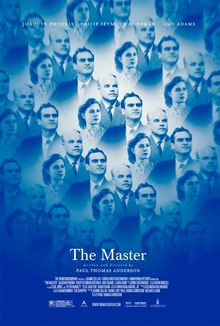
THE MASTER directed by Paul Thomas Anderson (USA, 2012)

I was prematurely dismissive about There Will Be Blood, Paul Thomas Anderson’s previous movie. I only really appreciated its quality and power on second viewing. I strongly suspect that the same will be true of The Master and certainly feel inclined to reserve final judgement until I’ve had chance to see it again.

The film’s opacity and lack of plot mean that there is a temptation to dismiss the universal critical acclaim it has garnered as hype and it is clear that,beyond the smart press, it has already divided ‘ordinary’ punters. It has been branded as a Marmite movie, something you’ll either love or hate.

If asked the question ‘what is it about?’, the most typical reply would be that it is a veiled study/satire of the birth of scientology but this seems a bit reductive to me. As it raises philosophical issues about the nature of madness, rationalism and existentialism, dismissing it on the grounds that there’s no narrative arc seems to me to be a superficial reading. Continue reading →