Category: Photography


REGARDING THE PAIN OF OTHERS by Susan Sontag

"Narratives can make us understand. Photographs do something else; they haunt us"

This book was first published in 2003 but couldn’t be more topical. Images of James Foley’s beheading at the hands of ISIS terrorists that briefly circulated via You Tube and Twitter this week are just the latest in a never-ending sequence of atrocities that raise ethical, and politically charged, questions about what the media should show in print, online or on TV.

It is human nature to be torn between fascination and repulsion when confronted by such images. The late Susan Sontag understood that deciding whether or not to view such graphic representations of man’s inhumanity to man makes us either spectators or cowards. Being neutral is not an option.

Regarding The Pain Of Others is both a companion piece and an updating to Sontag’s 1977 collection of essays On Photography. In it, she explores how still photographs come to influence and, in some cases, define the way we regard war and conflict.

Her starting point is the Three Guineas essay published in 1938 in which Virginia Woolf wrote of the horror and disgust she felt at seeing photographs of victims of the Spanish civil war. These  forced Woolf to conclude “War is an abomination, a barbarity, war must be stopped”. This outrage is perfectly understandable, even praiseworthy, but also naive.  Sontag asks pointedly: “Who believes today that war can be abolished?” Continue reading

The final peer-assessed assignment for Coursera MOOC on Andy Warhol run by Edinburgh University was to write between 650-750 words to describe, discuss and evaluate a piece of Warhol’s work. This is what I wrote:

Warhol Electric Chair 1964

Andy Warhol always struck the pose of an artist who chanced upon an image in much the same way that a child might discover a striking picture in a glossy magazine.

Yet a sparse and evocative photograph of an electric chair hardly seems to be a random choice. A real photograph carries a weight of fact, even though it can be deciphered in various ways.

Warhol’s image was adapted from a 1953 photograph taken at Sing-Sing Gaol in New York and produced in 1964. It was presented to the Tate Modern in London by Janet Wolfson de Botton in 1996. The medium is screen print and acrylic paint on a canvas sized 562 x 711 mm.

Warhol subsequently re-used the photo for a series of fourteen prints in different colour combinations but this particular one has a muddy, minimalistic colour scheme almost as if the picture has deteriorated with age. An unwitting viewer might therefore mistake it for a torture instrument from a bygone era rather than a killing machine which is still in use in many parts of the USA, albeit on a reduced scale. Continue reading

Becoming a parent changes you and your relationship with your partner. True as this is, banal statements of this kind say little about what fathering is like and do nothing to prepare you for the riot of emotions that go with the job.

NYC-based photographer Phillip Toledano‘s The Reluctant Father goes a long way to addressing the reality in humourous and ultimately touching way..

He likens confronting the fruit of his loins to a series of close encounters with an alien being.

His experience was all the more traumatic because, as he freely admits, “I was never particularly interested in having kids”. It was just something that happened. Continue reading

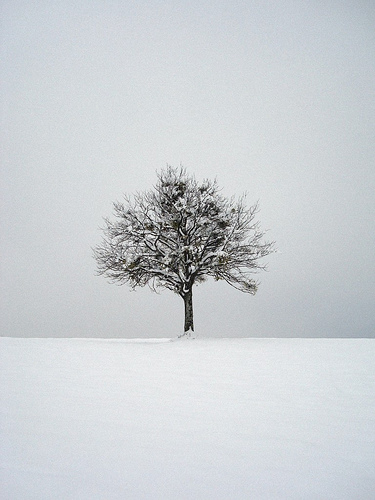
A L O N E

Sometimes it is good to be alone.

tree1

THE GRAVITY OF EXISTENCE

GRAVITY directed by Alfonso Cuarón (USA, 2013)

Hedonistic sex and conspicuous consumerism are staples of the American film industry so a high grossing, critically acclaimed movie that includes neither is worth celebrating.

I’m not knocking the joy of fucking and shopping per se, but as a philosophical basis for a fulfilling life I don’t regard these recreational activities as the be all and end all.

In Gravity the immeasurable vastness of the universe serves as a spectacular metaphor for human potential and isolation, putting our existence into context by showing the relative insignificance of mankind. Continue reading