Tag Archive: Salman Rushdie


The 3D magic of The Wizard Of Oz

THE WIZARD OF OZ directed by Victor Fleming (USA, 1939)

the-wizard-of-oz-posterI first saw The Wizard Of Oz in a fleapit cinema in my home town in the English Midlands when I was around 10 years old. The contrast between the rundown movie house and the glimmering images on-screen were striking.

Seeing it now for the umpteenth time in a lovingly restored 3D version brought back all the magic.

As a pre-teen in the 1960s, Disney was the dominant force for young adult films. The Love Bug, Jungle Book and Blackbeard’s Ghost were among my favorites at that time. I expected Oz to be a cartoon so it was a big shock to be confronted by a live action musical. And how was I supposed to categorize this movie?

On one hand it’s in the classic fairy tale tradition but the good versus evil themes were presented in a manner I hadn’t seen before and have rarely encountered since. Continue reading

A DEATH IN THE FAMILY by Karl Ove Knausgaard (Harvil Secker, 2012)

"Writing is drawing the essence of what we know out of the shadows"

9780099555162After writing relatively conventional novels, the Norwegian author, Karl Ove Knausgaard declared, as he approached  the age of 40,  that he was sick of fiction.
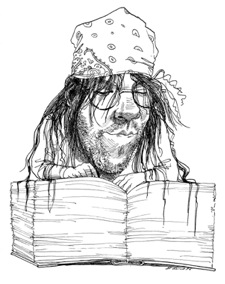
He felt that making up stories was essentially a dishonest practice. As an alternative, he decided to tell the story of his own life but this, the first of six volumes, is far from being a conventional autobiography. The original title is Min Kamp 1 (My Struggle) which is, it is to be hoped, an ironic reference to Hitler’s Mein Kampf.

The books could be seen as an exploration of a mid-life crisis with all the doubts, self-loathing and shame that go with the territory. His decision not to change any of names inevitably leaves family, friends and acquaintances exposed too. This is all the more pronounced given the huge success of the books, particularly in his native country where he has achieved a strange mix of celebrity and notoriety.

He writes: “to judge you have to stand outside and that is not where creativity takes place”. Much of his reputation, and repudiation, derives from the fact that he has opted not to omit uncomfortable thoughts or events. He immerses himself in minutiae of his daily life, making a point of not excluding banal activities like shopping or tea making. “I wanted to see how far it was possible to take realism before it would be impossible to read”, he says. Large parts of it are intentionally tedious, boring in the sense that life is often boring. Continue reading

dfwI have this ambitious (probably crazy) plan of re-reading David Foster Wallace’s Infinite Jest and making my own ‘reader’s guide’ to try to examine just why and how it is a masterpiece. Often I read novels carelessly and miss connections or subtleties. This novel represents the ultimate challenge for a more attentive study. It is something I started and set aside a few years back and this is the preamble I wrote at the time: 

Infinite Jest was written in 1996 and is, by any standards, a big novel. It stretches to 981 pages with a further 96 pages of footnotes to push it beyond the 1000 mark. Footnote is probably a misnomer since many are more than just clarifications or references. One (110) runs to 17 pages. So, it’s not a novel you’d pick up lightly or cast aside easily (unless you wanted to do someone an injury!).

It is a definitive example of a genre of contemporary fiction that British critic James Wood memorably calls “hysterical realism”. In this category he also places U.S. heavyweight writers Thomas Pynchon & Don Delillo and British post-colonialist authors Salman Rushdie & Zadie Smith. Wood writes:
“Storytelling has become a kind of grammar in these novels; it is how they structure and drive themselves on. The conventions of realism are not being abolished but, on the contrary, exhausted, and overworked”

Continue reading

TESTING BOOKTRACK

I’ve been test driving Booktrack on my ipad – a free app marketed as a revolutionary new reading / listening experience.

How it works is that selected titles are downloaded to your chosen device complete with a built in synchronized soundtrack. You can set specially composed music to play at the same pace as your reading speed.

The website assures us that “Unlike listening to random music, this music is scored to accompany the text and make sense to the story, helping to further the imagination and the story telling. The sound does not take away from the reading experience; it enhances it”.

I sampled the whole of The Ugly Duckling and the preview copies of stories by Salman Rushdie and Edgar Allan Poe.

The ‘sound designers’ combine ambient effects and field recordings like quacks and gunfire for Hans Christian Anderson’s tale.  Initially it felt quite distracting but it is quite cleverly done and by no means as kitschy as it sounds.  The site is clean, well designed and easy to navigate.

Continue reading

HITCH-22 – A SELECTIVE MEMOIR

It may sound morbid, but I wanted to read this book before Christopher Hitchens dies.

Sadly. as Hitchens acknowledges in the introduction, his demise is likely to come sooner rather than later. He is undergoing chemotherapy for oesophageal cancer and the odds of making a recovery are not good.

Anyone thinking that this serious condition might make him reassess his rejection of belief in the afterlife or what he calls the “sinister fairy tales of Christianity” should think again. His illness has actually made him more determined to reaffirm his position: “The irruption of death into my life has enabled me to express a trifle more concretely my contempt for the false consolation of religion, and belief in the centrality of science and reason”.

This book confirms Hitchens as a high profile intellectual who revels in the chance of a good argument which is for him, far preferable to boredom, in the same way that hostility is preferable to indifference . This explains why he declares that his ideal place to live is “in a state of conflict or in a conflicted state”.

If you read this book, as I did, hoping to learn more about the man behind the public profile, you will be disappointed. This is a memoir rather than an autobiography so we read of events, people and places that have influenced him but find out very little about his private life. Continue reading