Category: Modern Art


Alice_biblio“In a Wonderland they lie, Dreaming as the days go by, Dreaming as the summers die: Ever drifting down the stream, Lingering in the golden gleam. Life, what is it but a dream?”

La Biblioteca Malatestiana in Cesena  are celebrating the 150th anniversary of  Alice In Wonderland with a small exhibition (curated by Giulia Quintabà & Maria Luisa Pieri).

This consists of book illustrations from a range of editions of Charles Lutwidge Dodgson’s timeless classic,  together with photographs, objects and brief biographical information.

_alice.rabbitJPG.JPG

One of the illustrations for the Treviso Comic Book festival

34 designs are by artists in collaboration with the Treviso Comic Book Festival and these are far preferable to the sappy Disney style illustrations  in some of the books on display.

These do not top the original drawings by Sir John Tenniel (1820-1914) which are still the ones that best stand the test of time.

The surrealism and wonderful strangeness of Lewis Carroll’s work means that it’s a work that never really goes out of fashion and remains as popular with adults as with children. Continue reading

BANKSY (AND OTHERS) ON ADVERTISING

Original  Coca Cola image designed by Karina Nurdinova based on Bank’s letter.

My ‘Ads Are Not Innocent‘ poem in yesterday’s post was inspired by Banksy’s Letter On Advertising.

This was in turn inspired by Sean Tejaratchi’s 1999 essay, ‘Reciprocity In Theory And Practice’ which appeared in issue 1 (Death, Phones, Scissors) of Tejaratchi’s clip art zine Crap Hound.

The similarities are obvious. For instance, the American wrote “Why should I ask an assailant’s permission to keep a rock he’s just thrown at my head” while Banksy’s version reads: “Asking for permission is like asking to keep a rock someone just threw at your head”.

Given that the thrust of the two men’s argument is that whatever is in the public domain is free to use and manipulate, the plagiarism by Banksy is ironic but is no crime.

His ‘borrowing’ of Tejaratchi’s words is graciously put into context in a ‘let’s set the records straight’ statement.

In this year’s BBC 6 John Peel lecture, Brian Eno’s chosen topic was ‘The Ecology of Culture’, although his fascinating talk could equally have been entitled ‘The Economy of Culture’.

In it he attempted to set himself the task of answering two questions:
1. Is Art a luxury?
2. What are the conditions in which the Arts can flourish? Continue reading

IL BEL PAESE – Italy from the Risorgimento to the First World War

(Museo d’Arte, Ravenna – 22nd February – 14th June 2015)

‘Fanciulla sulla roccia a Sorrento’ by Filippo Palizzi c.1871 – the painting chosen as the image for the Ravenna exhibition.

It is ironic that Italians still need reminding how beautiful their country is.

Constant political turmoil and endemic corruption can blind citizens to the fact that these ignoble events take place against a backdrop of natural splendour and architectural magnificence.

This excellent exhibition shows us why Italy still more than justifies being referred to as Il Bel Paese (“the beautiful country”), a term first coined in the Middle Ages by Dante and Petrarch. Continue reading

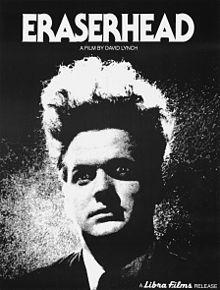
ERASERHEAD directed by David Lynch (USA,1977)

Seeing Eraserhead in a small arts cinema in Birmingham soon after its UK release was a kind of epiphany. Everything I thought I knew about movies suddenly had to be reimagined.

Here were images that defied logic yet were recognisable as the world I had read in the stories of Franz Kafka or seen in the surrealistic paintings of Max Ernst.

The low-budget horror sequences were at once comical yet hideously grotesque. The creation of mood through Alan Splet’s extraordinary analogue sound design was like nothing I’d heard before.

Watching it again in a brilliantly restored DVD version is a different experience because now there are so many more points of reference. Body horror is a recognized sub-genre and we can refer to images as Lynchian to give a context which was entirely absent in 1977.

Yet even from this more knowing perspective, you will struggle to explain what connects a black planet in space, a man pulling levers in a shack, a singing lady in the radiator, worm-like fetuses or a severed head being turned into pencil erasers?

 With typical perversity David Lynch says Eraserhead is the most spiritual of all his films yet this is a secular, nightmarish world that, for all its absurdity, many will still find sick and horrifying.

It remains totally unique and stands as one of the most terrifying movies in the history of cinema.