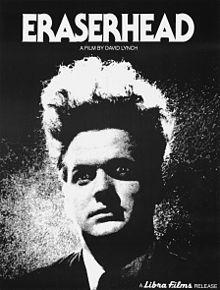
ERASERHEAD directed by David Lynch (USA,1977)
 Seeing Eraserhead in a small arts cinema in Birmingham soon after its UK release was a kind of epiphany. Everything I thought I knew about movies suddenly had to be reimagined.
Here were images that defied logic yet were recognisable as the world I had read in the stories of Franz Kafka or seen in the surrealistic paintings of Max Ernst.
The low-budget horror sequences were at once comical yet hideously grotesque. The creation of mood through Alan Splet’s extraordinary analogue sound design was like nothing I’d heard before.
Watching it again in a brilliantly restored DVD version is a different experience because now there are so many more points of reference. Body horror is a recognized sub-genre and we can refer to images as Lynchian to give a context which was entirely absent in 1977.
Yet even from this more knowing perspective, you will struggle to explain what connects a black planet in space, a man pulling levers in a shack, a singing lady in the radiator, worm-like fetuses or a severed head being turned into pencil erasers?
With typical perversity David Lynch says Eraserhead is the most spiritual of all his films yet this is a secular, nightmarish world that, for all its absurdity, many will still find sick and horrifying.
It remains totally unique and stands as one of the most terrifying movies in the history of cinema.
 One of the guiding principles of surrealist artists like Salvador Dali, Max Ernst or Luis Buñuel was that ideas and images should defy rational explanation.