FILM : A VERY SHORT INTRODUCTION by Michael Wood (Oxford University Press)
What can you say about the subject of film in 144 pages that hasn’t been said before? Quite a lot, actually if you are Michael Wood, professor of comparative literature at Princeton University.
He brings a fresh gaze to what might otherwise be a tired subject and does so without being pompous or elitist. He recognises that movies can be works of art and say something profound about the human condition but ,equally, they have a role in providing what he calls “pure unimproving pleasure”.
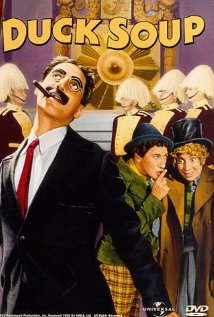
He picks a quote from the Marx Brothers’ Duck Soup to illustrate how what we see in film plays on our perception of reality. In a scene where Chico and Harpo are both disguised as Groucho, Margaret Dumont sees one exit and can’t understand how the other ‘Groucho’ can still be in the room – “Who are you gonna believe, me or your own eyes?”, asks Chico.
Filmmakers play with such illusions and deceptions all the time to raise the conundrum that Wood poses: “you can know what you can’t see but you can’t see what you don’t know”.
Statements like this could easily have led down a dead-end of navel gazing, but Michael Wood isn’t in the business of making obscure philosophical statements for the hell of it.
At the heart of this book is a deep and enduring love of the medium since film can “endow lifeless things with life, or living things with a different life”.
He gives a brief overview of the origins and various definitions of film in all its forms and despite the demise of cinemas as movie palaces, he remains optimistic about the future.
We experience films in wholly different ways now and on this topic he quotes Jonathan Rosenbaum from his book Goodbye Cinema, Hello Cinephilia in identifying a new kind of viewers with “a love of films that doesn’t depend on the old experience of cinema”.
 Through You Tube, Netflix, Mubi and countless other legal and illegal online resources we have the history of film at our disposal that has never been possible before. There are pros and cons to this that you could argue about until the cows come home but Wood prefers to end on a deliberately positive note : “Film, in its magical animating mode doesn’t define, fix or even represent anything, doesn’t capture, hold or freeze, it lets its objects run, lends them the life we thought they had lost; and shaped or ragged, it mixes what we remember with what we dream and offers us an image of movement that we often can’t quite believe and almost never can deny” .
In other words, memories and imagined worlds can become united by film ; this why the where, when and how we watch may change but the desire to see films will never die.

 After two movies based on vaudeville shows, Monkey Business was the first Marx Brothers film written specially for the big screen. It’s included on the syllabus of the The Language of Hollywood Coursera MOOC to show how, with the coming of sound, many films of the 1930s were not dependent on innovative auteurs but relied on the ability of the players to generate the entertainment.