

When asked why I don’t join groups, I have been fond of citing Groucho Marx’s much-quoted quip that he refused to join any club that would have him as a member. This is a good line but a glib answer to a serious question. As often tends to be the case, the truth is more complicated.
It is not that I am opposed to those who join together in the name of good causes or in the pursuit of a more harmonious society. Anybody who is prepared to stand up for their beliefs deserves praise and should not be subject to cynical sniping. I accept that there is something innately reassuring about finding kindred spirits who share your world view.
So why don’t I join these noble tribes in a quest to put the world to rights?
One reason is that I have also had a marked tendency towards misanthropy. I have read and fully acknowledge Rutger Bregman’s more charitable view of Humankind but I can’t wholly endorse his conclusions. I find myself more inclined to agree with the sentiments expressed in Nick Cave’s song ‘People Ain’t No Good’.
Another cause of my aversion to groups is my innate shyness. Put bluntly, people make me nervous! But I don’t think this is a unique or unusual feeling. Practically everyone is shy in certain situations and if they are not, they are usually the types who lack the social graces and reject accepted notions of civilized restraint.
But I think it is the common characteristics of many groups that are the main reason I stay clear of them. I would maintain that even the most fervent campaigning organisations can turn into less radical gatherings. What begins with an expression of revolutionary zeal can easily subside into cosy discussions over tea and cakes, wondering why the rest of world are not as enlightened and intelligent as you are.
But, I hear you mutter, the people united will never be divided. Heartening as this platitude may be, it is more often the case that corporate power retains its strength through unity. Social uprisings can lead to positive change but they can also result in greater suppression and tighter restrictions. In recent years, populism as an expression of collective power has morphed into state-led regimes that resemble totalitarianism.
To stand against ‘herd mentality’ is as much of a defiant social act as bonding together under the warm glow of comradeship. I applaud the naysayers, the rebel rousers and the iconoclasts but I also value contrariness above clubbiness. That’s why I don’t join groups.


 After two movies based on vaudeville shows, Monkey Business was the first Marx Brothers film written specially for the big screen. It’s included on the syllabus of the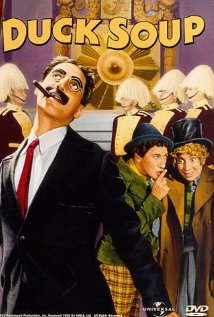
 FILM : A VERY SHORT INTRODUCTION by Michael Wood (Oxford University Press)
 Through You Tube, Netflix, Mubi and countless other legal and illegal online resources we have the history of film at our disposal that has never been possible before. There are pros and cons to this that you could argue about until the cows come home but Wood prefers to end on a deliberately positive note : “Film, in its magical animating mode doesn’t define, fix or even represent anything, doesn’t capture, hold or freeze, it lets its objects run, lends them the life we thought they had lost; and shaped or ragged, it mixes what we remember with what we dream and offers us an image of movement that we often can’t quite believe and almost never can deny” .


