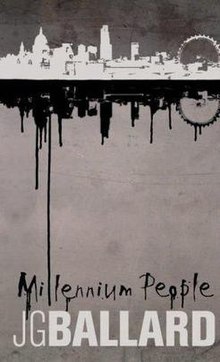
J.G. Ballard’s ‘Crash’ is one of those rare novels that changes the way you see the world. Not only is it full of majestic writing (“traffic moved like blood in a dying artery“), it is also able to enter the mindset of his eponymous narrator who at one point reflects that “the entire zone which defined the landscape of my life was now bounded by a continuous artificial horizon”.
Ballard wrote in his 1995 introduction to the novel that “I would like to think that ‘Crash’ is the first pornographic novel based on technology”. This is a smart sound bite but to use the word ‘pornographic’ is also misleading . Although Ballard demonstrates an intimate knowledge of the dynamics (the ins and outs!) of porn, his descriptions are too detached and clinical to be sexy. They are consistent with his philosophy that “novelists should be like scientists, dissecting the cadaver”.
Ballard regarded the automobile as the key symbol of the 20th century; an integral part of our “metallized landscape” . The identification of automobile as phallic symbol has become such a familiar cliché that this it is no longer questioned. Scantily clad models pose across the bodies of cars at motor shows while advertisers and car designers routinely direct and respond to sexual fantasies. This process is brilliantly described by Ballard as the “subordination of function to gesture”.
The commonplace association of automobiles with sex and power is the basis for Ballard’s sinister and deliberately provocative vision. He examines the symbolic marriage of man and machine through the sustained metaphor of the car-crash as a sexually transforming event. So of the severely crippled Gabrielle, he writes: “The crushed body of the sports car had turned her into a creature of free and perverse sexuality, releasing within its twisted bulkheads and leaking engine coolant all the deviant possibilities of her sex”ù
The novel’s anti-hero is Robert Vaughan, a one time computer specialist turned TV scientist with “an aggressive lecture-theatre manner” whose charisma stems from his unswerving obsessions and insatiable sexual gymnastics. Here are two descriptions of the sex act he engages in:
“Vaughan gripped the nipple between thumb and forefinger, extending it forward in a peculiar manual hold, as if fitting together a piece of unusual laboratory equipment”
“Vaughan drew his fingers from the girl’s vulva and anus, rotated his hips and inserted his penis into her vagina”.
The same dispassionate voice is used in describing death. For instance, when the first person narrator (James Ballard) observes a fatally injured woman lying in a hospital bed he notes:
“I visualized the graphs that recorded the falling temperatures of her rectum and vagina, the steepening gradients of nerve function, the last curtains of her dying brain”
It is this tone that makes the novel as disturbing as it was when it was written in 1973. There is no moral stance to reassure the reader that sanity or convention will prevail. The narrator makes no judgement on the extreme and increasingly deranged actions of the characters.
Nicolas Roeg was once in the frame to make the movie version. This would have been a logical choice because in films like ‘Don’t Look Now’ and ‘Bad Timing’, Roeg makes a close link between violence and desire. However, I’m sure that he would have made a more heavily stylised version of the book and steered away from its harder imagery.
David Cronenberg makes no such concessions to refined taste and, on the contrary, positively revels in the sick, depraved lives of Ballard’s creations. The movie won the jury prize at Cannes under the specially invented category of “originality, audacity and daring”.
Cronenberg – a self-confessed “card-carrying existentialist” understands the twisted logic of Ballard so is able to present visual images of what the ‘Sage of Shepperton calls “the deviant technology of the car-crash”. He deliberately avoids using the conventional Hollywood action formula when shooting the car-crashes; there are no slow motion sequences or multiple camera angles. Similarly, the sex is frequent, sometimes erotic, but not presented just for the audience’s titillation.
In Cronenberg’s movies, he has always identified with, and celebrated, those who exist on the margins of conventional social structures. He argues persuasively that what society regards as normal is actually an effort of human will and not a reflection of natural behaviour.
‘Crash’ is a book written ahead of its time and the movie version is equally controversial because it doesn’t try to sanitize or soften Ballard’s dark vision. In the novel, Vaughan dreams of dying in a blaze of blood and glory with actress Elizabeth Taylor. In the movie we see spectators enjoying a re-enactment of the “flamboyant public death” of James Dean. Today, there remains a morbid fascination for celebrity deaths, epitomised in the public clamour for details surrounding the last fatal journey of Lady Diana.
Ballard’s graphic descriptions still shock through the uncompromising extremity of his ideas and the power of his writing. His words accurately mirror the violence and sexually explicit imagery that we take for granted in our daily lives. Today, we have web sites like car accidents.com and images of ‘real life’ accidents on TV that blur the line between entertainment and information. In Ballardian technology, fact and fiction, like reason and nightmare, are indistinguishable. As he wrote: “The fiction is already there. The writer’s task is to invent the reality”.

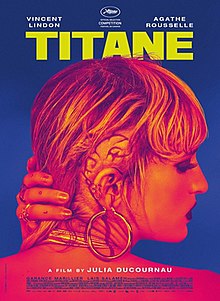
 If this movie had met with universal critical acclaim or had achieved commercial success it would almost certainly have denoted its failure in artistic terms. Fortunately, therefore, it polarized the press and bombed at the box office.