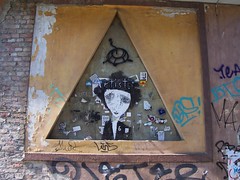
From the age of 17 onwards I have been fascinated by Franz Kafka’s world – both in his fiction and his life as an insurance clerk in Prague. When I first read his novels and short stories I was a frustrated clerk myself, working for the Inland Revenue in London and imagining myself as a struggling writer in my free time.
Even now, the shadow of Kafka lurks over any attempts at creative writing and so my stories invariably tend to feature a social outcast pitched against faceless authority.What helped fuel the cult of Kafka for me was that there were so many books about his troubled private life and his awkward public persona. There were his diaries and volumes with letters written to his father, his sister Ottla, his girlfriends (Felice and Milena) and to his friend and editor Max Brod.Despite Brod’s promise to destroy Kafka’s unpublished works all these various manifestations of the writer’s state of mind are in the public domain. With friends like these who needs enemies?
One of the key volumes to confuse the line between the myth and the man is Gustav Janouch’s Conversations With Kafka which portrays Kafka as an ethical seeker after truth. Janouch was a young poet whose father worked at the same insurance institute that employed Kafka. His book is an act of hero-worship which philosopher and historian Gershom Scholem described as “a work of dubious authenticity that nevertheless was swallowed uncritically by a hungry world”.
Stylistically, historically and geographically there is a world of difference between Franz Kafka and David Foster Wallace (DFW). Yet, it seems to me that both writers have important points of connection in the way they explore deep questions about the nature of humour, loneliness and alienation. Continue reading →

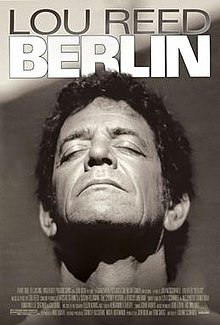 LOU REED’S BERLIN directed by Julian Schnabel (USA, 2008)