Tag Archive: Oscar Wilde


Turing imitates Erasmus

In 1950, celebrated WWII code breaker Alan Turing devised what he called an imitation game for a paper in which he asked ‘Can machines think?’ A modern day equivalent would be ‘Can politicians think?’ On the basis of the evidence of political ineptitude this year, the answer to that question is a resounding ‘NO’.

The latest example of political ignorance is the decision to pull of the EU Erasmus language exchange program by the UK (with the exception of Northern Ireland). Despite Boris Johnson’s assurance that the scheme was safe in Tory hands, this is one of the many negative aspects of Brexit. In celebrating ‘freedom’ from the European Union, the small island of Britain has suddenly become much smaller. Continue reading

Screen shot 2019-09-22 at 18.52.48

Ursula K. Le Guin (1929 – 2018)

I still find myself wanting to read as much as possible as a way of making sense of the world and my own place within it.

I aim to increase the number of blog posts on what I’m reading. These will probably serve more as a reminder to myself rather than offering any particularly profound insights, but who knows. In any event, writing is the best way of organizing thoughts. Making these public gives an added incentive not to be flippant, sloppy, unkind or lazy.

The simple pleasure of making new discoveries and revisiting old favorites is an end in itself. The joys are an antidote to the cynical business-minded world in which, to paraphrase Oscar Wilde, consumers are conditioned to know the price of everything but the value of nothing.

To confirm this, I was happy to stumble upon something Ursula K Le Guin said in a speech at the National Book Awards in 2014 : “Books aren’t just commodities; the profit motive is often in conflict with the aims of art. We live in capitalism, its power seems inescapable – but then, so did the divine right of kings. Any human power can be resisted and changed by human beings. Resistance and change often begin in art. Very often in our art, the art of words”.

When do men get perverted?

ariel1

The image that excited the ‘perverts’.

When you are in your teens anyone over 30 seems ancient. Only when you start getting on in years do you come to redefine what it means to be middle or old-aged.

I am 57 so can wholly relate to Oscar Wilde’s statement that “The tragedy of old age is not that one is old, but that one is young”

I was struck by this thought again when reading a blog post by children’s author, Stephanie Faris entitled  ‘There’s no excuse for being a perverted old man’.

This relates to a series of sexually explicit comments made after an ‘innocent’ photo was uploaded to Instagram by 17-year-old actress, Ariel Winter. As you can see, this is not by any means an overtly sexy pose but the amount of bare flesh on display was enough to get some men excited all the same.

Faris writes: “Blaming the young girl isn’t the answer. Saying the men are wrong for looking isn’t the answer, either. However, there is a difference between looking at someone and saying extremely disgusting things to that person”.

I agree with this and would add that dumping all this venom on ‘old men’ isn’t all that helpful either; particularly when ‘old’ seems to extend to anyone over 40 – presumably on the basis that this is the age when they are technically  ‘old enough to be her father’.

These salacious comments would have been equally inappropriate coming from a male who was the same age as the girl.  The routine objectification of women is the issue here and this can, and does, start at any age.

Perversion and creepiness may become more embedded in the individual as the years pass but I take issue with the implication that these negative traits are confined to men of a ‘certain age’.

I’m just saying.


YOUTH directed by Paolo Sorrentino (Italy, 2015)

1youth3“Youth is wasted on the young”, quipped Oscar Wilde, or was is George Bernard Shaw?

Whoever made this observation, knew something of the poignancy and sadness of growing old.

All Paolo Sorrentino’s films to date have featured elderly characters struggling to come to terms with the realisation that the best years of their lives are almost certainly behind them. Youth , despite its title, is no exception.Paradoxically, it is more about facing up to the inevitability of dying than the carefree pleasures of our ‘salad days’.

At its heart is the friendship between a retired composer Fred Ballinger (Michael Caine) and Mick Boyle (Harvey Keitel) a film director who believes that he still has at least one great film in him. Continue reading

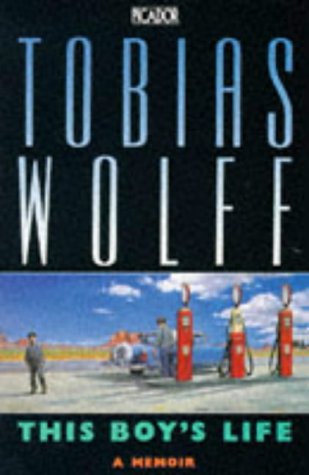
THIS BOY’S LIFE by Tobias Wolff (Picador 1990, first published 1989)

wolffI picked this book up by chance in a second-hand store in Rimini. There was a copy of Wolff’s collected short stories too but I was more drawn to this autobiography or ‘memoir’ as he prefers to call it.

The cover promises something of the mythical America I know mainly from movies. The illustration by Irish painter Kenny McKendry shows a station wagon being filled up at a remote gas station and a young male figure standing apart in a cap and dungarees. It’s like an open air version of an Edward Hopper painting.

I also liked the author’s choice of epigraphs; one by Saul Alinsky (“He who fears corruption fears life”) and the other by Oscar Wilde: “The first duty in life is to assume a pose. What the second is, no one has yet discovered”. Both these quotations suggest an unconventional, yet worldly wisdom and humor.

I knew nothing of the writer nor that the book had been made into a movie starring Robert De Niro and a very young Leonardo DiCaprio. If you Google the book title, you get an image of these two A-list actors in Boy Scout uniforms.

I decided not to watch any trailers or clips so as not to be distracted or influenced by someone else’s views of the story. I habitually avoid synopses and reviews for the same reason; something that’s getting harder and harder to do in the age of information overload. I like coming to things with as blank a slate as possible so I can make my own mind up.

This Boy’s Life is a slight variant on Boy’s Life, the official scout magazine. Scouting is, fortunately, only one strand of the story which takes up the formative years of Wolff’s life from 1955, when he was 10, to the time when he has to choose between university or other options, I guess in his late teens. Continue reading