
LES QUATRE CENTS COUPS (The 400 Blows) directed by François Truffaut (France, 1959)
 I don’t speak French, but I am reliably informed (by Wiki!) that the original title of this brilliant movie comes from an expression meaning ‘to raise hell’.
To call the 12-year-old Antoine Doinel (Jean-Pierre Léaud) a hell raiser is a bit of an exaggeration. He is disruptive and difficult but he is a good-hearted kid whose transgressive behaviour shows a keen intelligence more than a malevolent spirit.
His rebellion against the soul-destroying school system and oppressive home environment seems a wholly justified quest for a non-institutionalised education that teaches him more than simply how to conform.
We see him playing truant, sneaking into cinemas and embarking on a non too successful career as a petty criminal.
Truffaut’s remarkably assured debut is loosely based on his own life and fulfilled his aim to show adolescence “as the painful experience that it is”. Continue reading
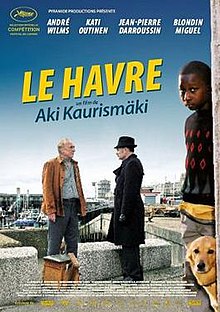 Aki Kaurismäki is Finland’s answer to Jim Jarmusch so you know in advance that his movies won’t be action packed. His latest movie Le Havre is plot driven but events unfold in a slow, unhurried fashion and it is full of enigmatic characters who never explain their actions.


