ORDET directed by Carl Theodor Dreyer (Denmark, 1955)
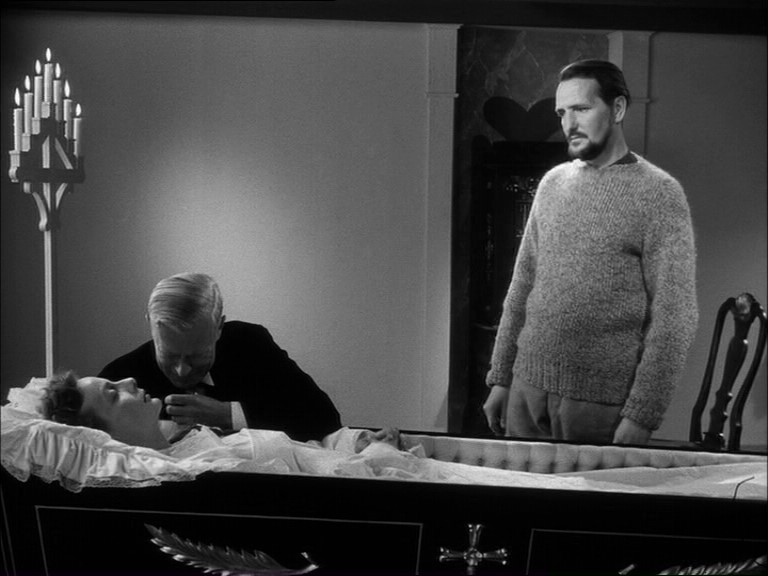 It gets harder and harder to keep an open mind about arts and culture but I can honestly say that I approached this movie with no preconceptions.(If you plan to see it in the same state of blissful ignorance, look away now as this post contains spoilers!)
The only thing I knew about it was that it had been placed 24th in the BFI/Sight & Sound list of greatest films ever made. Regular readers of this blog (if such beings exist!) will know by now that I have set myself a goal of seeing all of the top 50 films on this list (I still have 14 to go!)
While I marvelled at Dreyer’s Jeanne D’Arcy, I can’t say I was as thrilled by the Dane’s Ordet, a title which translates as ‘The Word’ as in ‘the word of God’.
 Devout widower Morten Borgen has three sons – Mikkel is an agnostic whose wife Inger is pregnant with her third child, Anders is a fragile youth who is besotted by the tailor’s daughter and Johannes has studied Kierkegaard so intensively he thinks he is the living incarnation of Jesus Christ.
The story is driven not so much by the plot as by the themes of faith and doubt. Johannes walks about in sandals like he’s in a trance issuing warnings in a weedy voice of dire consequences for those sinners who do not repent and recognise the glory of God. Inger’s ‘death’ during labour, is according to his apparently unhinged preaching, a judgement against those of little or no faith. This, not surprisingly, goes down like a lead balloon with the grieving husband. A smug priest offers no greater consolation, delivering biblical ‘in the midst of life we are in death’ style platitudes.
A bizarre finale transforms what had up until then been a painfully slow-moving and dour work of social realism. This ending would be too much even in the cheesiest Hollywood blockbuster as Johannes proves that he’s a true prophet after all and resurrects Inger before our very eyes. Mikkel immediately becomes a believer as he tearfully embraces his undead wife.
It’s a movie that could, and has, been praised as an inspirational work celebrating the power of faith. Devout athiests like me will see it as a logic-defying piece of wish-fulfillment that could only have been dreamed up by someone with an overactive religious imagination.